
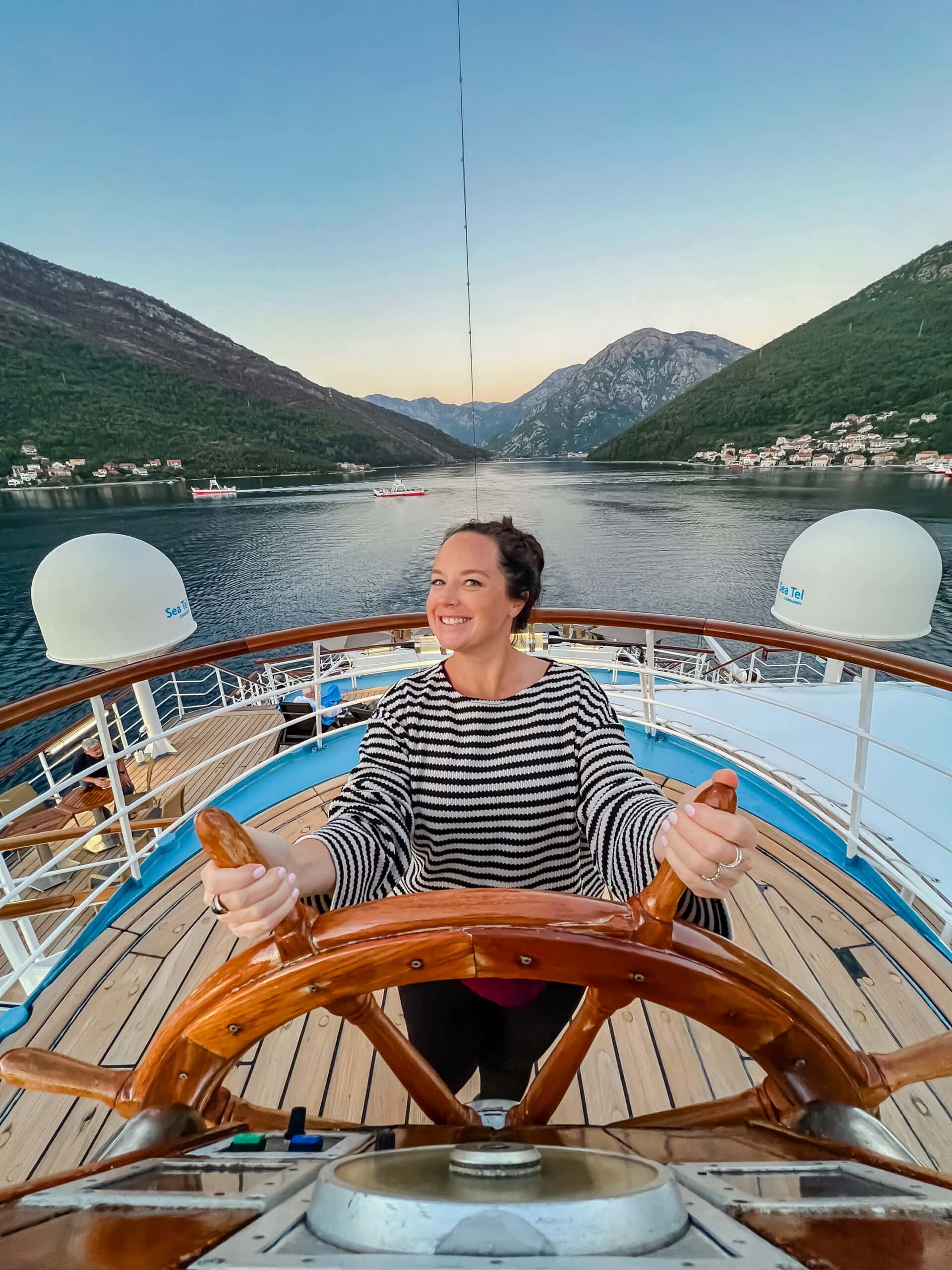
It wasn’t a hard decision to take a Bordeaux river cruise with Avalon Waterways along the Garonne and Dordogne Rivers. It felt like a chance to experience a side of France that often gets overlooked.
This itinerary focused on southwestern France, a region shaped less by grand capitals and more by rivers that have quietly directed trade, wine production, and settlement patterns for centuries.
The Garonne and Dordogne form the backbone of this region, converging to create the Gironde estuary, one of the largest in Western Europe.
These rivers have long defined the economic and cultural identity of places like Blaye, Bourg, and Saint-Émilion, where military strategy, agriculture, and river commerce intersect.
The landscape here is defined by gentle slopes, wide riverbanks, and an almost constant presence of vineyards. Wine is not a backdrop in this part of France; it is the organizing principle around which towns, estates, and daily life developed.
Starting and ending in Bordeaux, the route followed waterways that once carried ships deep inland from the Atlantic, linking fortified towns, vineyard-covered hillsides, and working ports long before leisure cruising existed.
A Bordeaux River Cruise with Avalon Waterways
We chose this 7-day river cruise with Avalon Waterways because the Garonne and Dordogne flow through a part of France that often sits outside the spotlight.
Cruising this route made the connections between destinations clear in a way that overland travel rarely does.
Days unfolded through a mix of guided walking tours, winery visits, and regional excursions, including time along the Atlantic coast at Arcachon Bay. The pace allowed for depth without overload, and the itinerary favored smaller towns and functional places over headline attractions.

By the end of the week, the experience felt cohesive and rooted, offering a clear understanding of how rivers continue to shape southwestern France, well beyond the usual tourist trail.
Avalon Waterway’s approach worked particularly well here because the destinations themselves reward slower, more grounded exploration.
Walking tours through citadels and old towns, visits to working wineries, and short drives into the Médoc and Arcachon Bay all felt appropriately paced and well-integrated into the daily itinerary of the cruise.
Time onboard functioned as a transition rather than an attraction, allowing the focus to stay on being off the ship and in the region. The result was an experience that felt connected and cohesive, offering a clear picture of how river, wine, and history intersect in this corner of France.
A Girls Trip Done Different

My sister and I try to travel together often. Whether it be a domestic road trip, camping adventure, or an international foray. When it came to deciding what was next, we knew we wanted to go to Europe.
What I wanted was a trip that allowed me to take the back seat to planning. This is a role I always take on, but I also run three businesses, and time is something I need to manage closely these days!
Then I remembered how incredible it is to river cruise in Europe. There was no itinerary to manage, no reservations to track, and no pressure to keep things running on time. Each day is already structured, with clear options and enough flexibility to choose how involved we want to be.
Eureka! I quickly decided we would take a France river cruise. This decision instantly removed the low-level stress that often comes with traveling together, especially when one person typically ends up as the default organizer.
Instead, we were able to focus on the experience itself and on enjoying the time together, without negotiating logistics along the way. It was a version of travel that allowed us to be fully present, turning the trip into shared downtime rather than a project to manage.
And to be totally honest. We’re hooked and had so much fun!
Our 8 Day Garonne and Dordogne River Cruise
Day 1 – Arrival in Bordeaux & Embarkation
We decided to fly into Bordeaux a day early and spent a night at the Hotel Indigo Bordeaux Centre Chartrons. This gave us time to recover from the jet lag and explore the city before joining up with our France river cruise itinerary.
Our morning was relaxed and allowed us to explore more of Bordeaux and take our time enjoying a coffee with a delicious pan au chocolat.


As the hotel was close to where the ship docks, we collected our stored luggage around lunchtime and walked to the pier to embark on the Artistry II.
We enjoyed lunch onboard and spent the remainder of the afternoon getting settled on the ship, walking along the river, enjoying happy hour, dinner, and an introduction to the week ahead.
Day 2 – Chateau de la Brede & Afternoon Cruising
We woke up still docked in Bordeaux, as planned. We had an interesting morning excursion planned before setting off on the Garonne River.
From then on, we were officially immersed in the underrated wonders of Southwest France.
Day Trip to Chateau de la Brede


The morning excursion took us south of Bordeaux to Château de La Brède, the birthplace and longtime residence of philosopher and political theorist Montesquieu.
Built between the 13th and 16th centuries, the château is surrounded by a moat and still sits within the agricultural landscape that shaped its long history.
Inside, the visit focused on Montesquieu’s life and work, including his time spent writing The Spirit of the Laws, a text that later influenced constitutional frameworks in Europe and the United States.
The preserved rooms, library, and personal artifacts provided context for how the estate functioned as both a working residence and an intellectual center.
The visit offered a measured look at the intersection of place, history, and political thought, grounding abstract ideas in a very physical setting tied closely to the region.
Afternoon Cruising on the Garonne River

After returning to the ship, we grabbed a coffee in the lounge and stepped out on deck as the lines were released.
Bordeaux gradually slipped behind us as the ship navigated an active, working section of the river, passing port infrastructure, low riverbanks, and occasional vineyard views.
We enjoyed a lovely afternoon at rest as we cruised along the Garonne River, taking in the scenery. This was the perfect way to ease into the rest of the itinerary.
Day 3 – Cussac-Fort-Médoc and Médoc Wine Region
Heading into our third day, we woke to find that we had arrived in the Médoc wine region of France. A region steeped in rich history and tasty grapes.
Morning Excursion to Cussac-Fort Médoc


The morning found us docked at the entrance to Cussac-Fort-Médoc, a small village anchored by its 17th-century fortress on the Gironde estuary.
Constructed between 1689 and 1691 under the direction of Vauban. The fort was part of a three-point defensive system designed to protect Bordeaux from naval attack, working in coordination with Fort Paté and the Citadel of Blaye across the river.
Its low walls, bastions, and barracks were built for function rather than grandeur, reflecting its role in monitoring and controlling river traffic rather than housing a large garrison.
Walking through the site made it easy to understand the strategic importance of this stretch of river, where commercial shipping, military defense, and access to the Atlantic all converged.
Today, the fort sits quietly along the water, offering a clear link between France’s military engineering past and the rivers that continue to shape travel through the region.
Afternoon Wine Tasting in the Médoc Region


The afternoon was spent exploring the Médoc wine region. We began with a bus drive through the long, narrow strip of vineyards that runs between the Gironde estuary and the Atlantic coast.
As we moved deeper into the region, the landscape shifted to orderly rows of vines punctuated by well-known château gates. Many of them are tied to classified growths dating back to the 1855 Bordeaux Classification.
After viewing several beautiful chateaus, we arrived at Château Lamothe-Bergeron, a Cru Bourgeois estate where the focus shifted from observation to tasting.
The guided sampling provided practical insight into Médoc blends, vineyard management, and aging practices. Above all, it gave us a chance to taste and savor some truly spectacular wines from the area.
Day 4 – Blaye and Bourg
Our day focused on two fortified river towns, Blaye and Bourg, both shaped by their strategic positions along the Gironde estuary and Dordogne River.
Independent Exploration of Blaye


Despite there being three options for tours in Blaye, we opted to head into the city for some independent exploration of the Citadel that dominates the town and the riverbank below it.
Built in the late 17th century by Vauban, the Citadel of Blaye was designed to control traffic on the Gironde estuary and defend Bordeaux from seaborne attack, working in tandem with forts on the opposite banks.


Walking through the fortified walls revealed how self-contained the site once was, with barracks, administrative buildings, and residential spaces still in place. It was easy to explore independently, as the site has many interpretation signs as you explore.
From the ramparts, the scale of the river became clear, along with the strategic importance of this location.
After touring the citadel, we took some time to wander the lower town, where everyday life now unfolds beneath the massive stone defenses. It didn’t take us long to locate a café where we enjoyed another round of pan au chocolat.
Guided Walking Tour of Bourg


Continuing along the Gironde estuary, we deviated up the Dordogne River for an afternoon stop in Bourg. Our walking tour focused on the town’s compact historic center, perched above the Dordogne River.
Moving on foot through steep lanes and small squares made it clear how Bourg developed around its elevated position, offering both defense and oversight of river traffic.
The tour highlighted layers of history rather than a single landmark, from medieval street layouts to remnants of religious and civic buildings integrated into daily life.


Vantage points along the route provided views back toward the river and surrounding vineyards, reinforcing Bourg’s long-standing connection to trade and wine production.
The walk was straightforward and informative, offering a clear sense of how geography, scale, and continuity have shaped the town over time.
Day 5 – Libourne and Saint-Émilion
Libourne sits at the confluence of the Isle and Dordogne Rivers and has long functioned as a commercial center for the surrounding wine regions, including Saint-Émilion.
We opted to dig deeper in this area with day trips, so we didn’t actually visit Libourne! Maybe next time.
Saint-Émilion


Our morning tour to Saint-Émilion focused on both the village’s history and its long-standing role in Bordeaux wine production. We began in the compact historic center, where steep stone streets and limestone buildings reflect centuries of continuous settlement.
Walking through the village provided context on how Saint-Émilion developed around monastic life, quarrying, and viticulture.
Our guide also addressed the region’s wine classification system and how Saint-Émilion differs from Médoc estates, with vineyards closely tied to the village itself rather than spread across large rural properties.
We visited various viewpoints and popular photo spots before making our way into an abbey for a special treat.


A short tasting introduced one of the village’s lesser-known traditions: Saint-Émilion macarons. Made with almond flour, egg whites, and sugar, these crisp, rustic cookies date back to the 17th century and are distinct from the filled macarons more commonly associated with Paris.
Paired with a glass of sparkling wine, the tasting offered a simple contrast of texture and sweetness. It was a welcome deviation from the vineyard-focused visits while still staying rooted in the region’s food culture.
Chocolate and Wine Tasting at Chateau Fleur de Lisse


In the afternoon, we opted for one of the option excursions that offered a chocolate and wine tasting at Château Fleur de Lisse. This chateau is a Saint-Émilion Grand Cru Classé estate located just outside the village.
Our experience paired several of the château’s wines with artisanal chocolates, structured to show how cocoa content, texture, and sweetness interact differently with tannin and acidity.
Rather than focusing on indulgence alone, the tasting was instructional, highlighting why certain pairings work and others clash, particularly with Merlot-dominant blends typical of Saint-Émilion.
Day 6 – Bordeaux
We had only been away from Bordeaux for four days. But it felt like it had been weeks, because we had visited so many incredible areas along the way.
Despite the full circle moment, the momentum didn’t fade. We were excited to dig deeper and get to know the city better.
Guided Walking Tour of Bordeaux


We opted to join the guided tram and walking tour of Bordeaux because it provided a structured introduction to the city over three hours.
Moving through the historic center, the tour focused on Bordeaux’s transformation from a medieval port into an 18th-century trading hub, driven largely by wine commerce and Atlantic trade.
Key stops highlighted how urban planning, uniform limestone façades, and river access shaped the city’s layout and economic power. The walk emphasized context over landmarks, explaining how the Garonne influenced everything from architecture to commercial growth.


It was a practical orientation, grounding the river cruise experience in the city that has long served as the gateway to southwestern France’s wine regions.
Afterwards, we broke away from the group and spent another two hours wandering the city on our own. Don’t miss the gates of the city!
Bordeaux’s historic gates reflect the city’s former role as a fortified port and points of control for goods moving in and out along the Garonne.
Structures like Porte Cailhau and Porte de Bourgogne still mark the transition between the old city and the riverfront, tying Bordeaux’s modern layout to its medieval past.
Day 7 – Arcachon Bay
Today, there were options to continue digging deeper in Bordeaux, or the chance to head for the Atlantic coast and experience a different side to the region.
Full Day Trip to Arcachon Bay


Leaving Bordeaux in the morning after breakfast, we headed west to Arcachon Bay, shifting the focus from river and wine country to the Atlantic coast.
Our excursion began with a stop at a local oyster farm, where we enjoyed a tasting centered on oysters harvested directly from the bay. The owners explained their growing methods, tidal influence, and seasonal variation.


From there, the tour continued into the town of Arcachon, where we enjoyed a lovely lunch overlooking the bay. The rest of our visit was free time to walk along the waterfront and through the town center.
It’s a nice town, but it was virtually dead in early October.
Despite this, our visit offered a clear contrast to Bordeaux’s inland character and rounded out the itinerary with a look at how closely this region’s food culture and coastal geography are connected.
Day 8 – Departure Day in Bordeaux, France
Waking up on the final morning of the cruise, it was easy to reflect on how much ground we had covered in a relatively short time.
Traveling along the Garonne and Dordogne Rivers offered a view of France that felt grounded and lived-in. It was far from the crowds that dominate many well-known European routes.

The pace of the week allowed space to absorb the places we visited rather than rush through them.
After a final breakfast onboard, we said goodbye to fellow travelers and the crew, disembarked in Bordeaux, and transferred to the airport for the journey home. The trip ended quietly, but with a clear reminder of how much depth exists in regions that often sit just outside the spotlight.
Our journey along the Garonne and Dordogne Rivers was part of a paid partnership with Avalon Waterways. However, all opinions, stories, advice, and love for visiting the quiet parts of Europe are 100% ours, as always.
You might also like:
- When is the Best Time to Visit Europe? (Not when you think!)
- Ultimate Europe Travel Planner
- 3 Days in Paris Itinerary (Tips, Suggestions & Attractions)
- How to Experience the Best of Germany’s Moselle Valley
- 11 Best River Cruises in Europe For Your Bucket List
